[Series Index]
The earlier parts of the series, written by Wangkon936, discussed the international forces that led to the East Asian Financial Crisis and the IMF bailout of Korea. This part, by the Korean, will discuss the social impact of the East Asian Financial Crisis on Korea.
Domestic Economic Impact
The impact of East Asian Financial Crisis on Korea was simply devastating. It is faster to count the large Korean corporations that did not file for bankruptcy. (Here is a decent list of the companies that died versus the companies that survived.) Every day there was a new large company going under. Even those who managed to survive had to face the scalpel of Korean government, as ordered by IMF. On June 18, 1998 alone, Ministry of Finance ordered 55 large companies to shut down. The coup d'grace -- almost in its literal sense, given that the French word signifies the "blow of mercy" that finally kills off the tortured prisoner -- was the disappearance of Daewoo in 1999, at the time the second largest company in Korea. At the time, Daewoo's automobile division was every bit as good as Hyundai's; its electronics, every bit as good as Samsung's and LG's; its shipbuilding, among the world's best along with other Korean shipbuilders. No matter -- Korean government had to show serious resolve that no company was too big to fail, and Daewoo disappeared into history.
One dead big company does not simply mean the employees of that company lost their jobs. A bankruptcy of a big company causes massive ripple effects, causing cascading bankruptcy to other smaller companies that depend on the big company. This is particularly true in Korea, whose economy revolved around a handful of huge conglomerates. (For example, Samsung makes everything from shoes to cars.) Even the companies that managed to stay alive had to undergo massive layoffs -- something that never happened in Korea. Unemployment rate skyrocketed. Previous to East Asian Financial Crisis, the unemployment rate of Korea was 2 percent. By the end of 1998, unemployment rate was 6.8 percent, creating the unprecedented number of 1.6 million jobless people in Korea. Property value plummeted also, with house prices dropping 12.4 percent in 1998.
(More after the jump)
Got a question or a comment for the Korean? Email away at askakorean@gmail.com.
Tuesday, August 30, 2011


Monday, August 29, 2011
How do You Grow Hair Quickly?
Dear Korean,
I've been an English teacher working here in Korea for 7 months. The other day I was casually remarking to a friend of mine about how quickly my hair grows and that it's almost a nuisance getting it cut every 3 weeks. She then said there's a Korean myth about people whose hair grows quickly but she wouldn't tell me exactly what it is. Do you know what she's talking about or is she just making it up?
T
She is not just making it up. In fact, she is being rather polite by not telling you.
Here is the myth in Korea about quickly growing hair -- thinking about sex all the time makes one's hair grow faster. Although not explicitly stated, this applies mostly to men.
I've been an English teacher working here in Korea for 7 months. The other day I was casually remarking to a friend of mine about how quickly my hair grows and that it's almost a nuisance getting it cut every 3 weeks. She then said there's a Korean myth about people whose hair grows quickly but she wouldn't tell me exactly what it is. Do you know what she's talking about or is she just making it up?
T
She is not just making it up. In fact, she is being rather polite by not telling you.
Here is the myth in Korea about quickly growing hair -- thinking about sex all the time makes one's hair grow faster. Although not explicitly stated, this applies mostly to men.
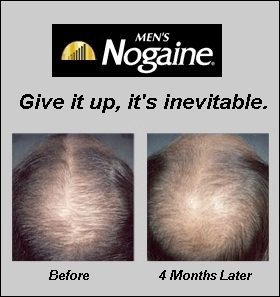
Instead of Nogaine, maybe just watch a lot of porn?
(source)
But how could it be possible that thinking about sex leads to hair growth? The only theory that has even a whiff of plausibility is that thinking about sex leads to increased level of testosterone, which leads to hair growth. At any rate, Koreans generally recognize this as a myth -- just something funny to say. If anyone tried to make a serious case for the myth, Koreans would also point out the countervailing myth: i.e., baldness is a sign of male sexual prowess.
Got a question or a comment for the Korean? Email away at askakorean@gmail.com.
Sunday, August 28, 2011
Ask a Korean! News: Making Batteries with Koreans
New York Times had a very interesting article about a new governmental project to promote lithium-ion battery manufacturing in Michigan, which also had a great deal to do with Korea. A few excerpts (all emphases added by the Korean):
(More after the jump)
Got a question or a comment for the Korean? Email away at askakorean@gmail.com.
Over the last two years, the federal government has doled out nearly $2.5 billion in stimulus dollars to roughly 30 companies involved in advanced battery technology. ... By almost any account, the White House has fallen woefully short on job creation during the past two and a half years. But galvanized by the potential double payoff of skilled, blue-collar jobs and a dynamic clean-energy industry — the administration has tried to buck the tide with lithium-ion batteries. It had to start almost from scratch. In 2009, the U.S. made less than 2 percent of the world’s lithium-ion batteries. By 2015, the Department of Energy projects that, thanks mostly to the government’s recent largess, the United States will have the capacity to produce 40 percent of them. Whichever country figures out how to lead in the production of lithium-ion batteries will be well positioned to capture “a large piece of the world’s future economic prosperity,” says Arun Majumdar, the head of the Department of Energy’s Advanced Research Projects Agency-Energy (ARPA-E). The batteries, he stressed, are essential to the future of the global-transportation business and to a variety of clean-energy industries.
Got a question or a comment for the Korean? Email away at askakorean@gmail.com.
Thursday, August 25, 2011
Ask a Korean! News: Korea's Role in Libyan Economy
Democracy is not just a supreme value for human freedom -- it also does a great deal for wealth and prosperity. Korea's role in rebuilding post-Gadhafi Libya is a nice example of this. Some excerpts:
Many of Korea's major construction companies cut their teeth by building massive projects in the Middle East during the 1970s and 80s. By early 1980s, Korea trailed only America in the amount of money earned from construction projects abroad, and over 90 percent of such revenue came from Middle East, particularly Saudi Arabia and Libya. In 1991, Dongah Construction finished building a massive pipeline to carry water from one end of Libya to the other, which was the largest construction project at the time.
Like Korea, Libya went from a dictatorship to democracy. Here is to hoping that Libya finds prosperity as Korea did.
Got a question or a comment for the Korean? Email away at askakorean@gmail.com.
Korea stakes claim in post-Ghadafi Libya [CNN]As the regime of Moammar Gadhafi crumbled, the value of South Korean construction firms rose.
When rebel forces swarmed into the dwindling Tripoli strongholds of Moammar Gadhafi Tuesday, investors in distant Seoul pushed the stock value of companies like Daewoo Engineering & Construction and Hyundai Engineering & Construction up nearly 10%, betting that the new rebel regime will mean lucrative reconstruction contracts.
...
Libya is a major business partner to South Korea, and trade has been hard hit by the Libyan conflict. While exports to Libya reached $1.4 billion last year, exports dove nearly 88% the first seven months of the year, according to the Korea International Trade Association.
Korean companies account for one-third of all foreign business in Libya according to the Korea Trade-Promotion Agency, KOTRA, working on projects worth some $36.4 billion at the start of this year.
When violence first erupted, the South Korean government helped with the evacuation of almost 1400 workers working on 300 different building sites.
...
KOTRA estimates the market for rebuilding Libya could be as large as $120 billion. Given the market share Korean firms had before this year, KOTRA estimates Korea's share of reconstruction could be as high as $40 billion.
Rebuilding projects could include repairing oil refineries, electricity power lines, ports and houses as well as new road construction.
Many of Korea's major construction companies cut their teeth by building massive projects in the Middle East during the 1970s and 80s. By early 1980s, Korea trailed only America in the amount of money earned from construction projects abroad, and over 90 percent of such revenue came from Middle East, particularly Saudi Arabia and Libya. In 1991, Dongah Construction finished building a massive pipeline to carry water from one end of Libya to the other, which was the largest construction project at the time.
Like Korea, Libya went from a dictatorship to democracy. Here is to hoping that Libya finds prosperity as Korea did.
Got a question or a comment for the Korean? Email away at askakorean@gmail.com.
Tuesday, August 23, 2011
IMF Bailout of Korea During East Asian Financial Crisis -- Interlude
[Series Index]
How ironic is it that as this blog discusses the IMF bailout of Korea during the East Asian Financial Crisis of 1997-98, U.S. and Europe are undergoing similar problems? The Economist captures very well a sentiment of schadenfreude among some Asian commentators:
Please do read the rest of the article, as it nicely discusses why the West's problem is also Asia's problem.
Part IV of the IMF Bailout series, which will discuss the social impact of East Asian Financial Crisis on Korea, will come out soon. The Korean has always said that in many ways, the events of Korea presages the events in America. In all likelihood, the lessons learned by Korea a little more than a decade ago will be directly applicable to the United States.
Got a question or a comment for the Korean? Email away at askakorean@gmail.com.
How ironic is it that as this blog discusses the IMF bailout of Korea during the East Asian Financial Crisis of 1997-98, U.S. and Europe are undergoing similar problems? The Economist captures very well a sentiment of schadenfreude among some Asian commentators:
What’s Schadenfreude in Chinese? [The Economist]These sundry calamities in the West have provided Asian commentators with an unmissable chance to unveil Western hypocrisy. Many Asian leaders have vivid memories of the lectures they endured in 1997-98 over their thriftless, incompetent economic management, and of the harsh medicine they were forced to swallow in return for IMF assistance. So some must enjoy the reversal of roles: emerging Asia as the model of steady, consistent economic policy and sustained growth; America, Europe and Japan mired in debt and slow growth or even recession. Mr Mahbubani, now dean of the Lee Kuan Yew School of Public Policy in Singapore, says “every piece of advice that the Asians received has been ignored” in the West.
A few weeks ago, China’s prime minister, Wen Jiabao, rebuked Britain for its obsessive harping on human-rights abuses in its dealings with his country. How he must have relished hearing his British counterpart, David Cameron, say this month that his government would not let “phoney human-rights concerns” get in the way of hunting down rioters and looters.
Please do read the rest of the article, as it nicely discusses why the West's problem is also Asia's problem.
Part IV of the IMF Bailout series, which will discuss the social impact of East Asian Financial Crisis on Korea, will come out soon. The Korean has always said that in many ways, the events of Korea presages the events in America. In all likelihood, the lessons learned by Korea a little more than a decade ago will be directly applicable to the United States.
Got a question or a comment for the Korean? Email away at askakorean@gmail.com.
Monday, August 22, 2011
Ask a Korean! News: AIDS in Korea
Here is a short piece of news about AIDS in Korea. Thankfully, most people with AIDS are alive:
Reports showed that the man and woman who were found to be the first AIDS patients in Korea in the 1980s are still alive. According to the Center for Disease Control, Korea's first official AIDS patient was 55-year-old Mr. A, who contracted the disease in 1985. Mr. A discovered that he contracted AIDS from abroad when he was getting tested for donating blood in Korea. Mr. A has been undergoing treatment, and has been living a healthy life.
Ms. B, the first Korean female AIDS patient who contracted the disease through sexual contact, also is in relatively good health. Ms. B lives with her son, who is in late 20s and born before she contracted the disease in 1988. The son does not have AIDS, exemplifying that living with an AIDS patient is not problematic.
The officer from the CDC said: "As long as an AIDS patient continues to undergo treatment, he can live out his expected life expectancy," and added "American NBA basketball star Magic Johnson has been living for 20 years since he contracted AIDS in 1991, thanks to effective management of the disease."
To date, there have been 7656 Korean AIDS patient. 82 percent, or 6292 patients, are still alive.
국내 에이즈 첫번째 환자 26년간 생존 [Dong-A Ilbo]
Got a question or a comment for the Korean? Email away at askakorean@gmail.com.
Reports showed that the man and woman who were found to be the first AIDS patients in Korea in the 1980s are still alive. According to the Center for Disease Control, Korea's first official AIDS patient was 55-year-old Mr. A, who contracted the disease in 1985. Mr. A discovered that he contracted AIDS from abroad when he was getting tested for donating blood in Korea. Mr. A has been undergoing treatment, and has been living a healthy life.
Ms. B, the first Korean female AIDS patient who contracted the disease through sexual contact, also is in relatively good health. Ms. B lives with her son, who is in late 20s and born before she contracted the disease in 1988. The son does not have AIDS, exemplifying that living with an AIDS patient is not problematic.
The officer from the CDC said: "As long as an AIDS patient continues to undergo treatment, he can live out his expected life expectancy," and added "American NBA basketball star Magic Johnson has been living for 20 years since he contracted AIDS in 1991, thanks to effective management of the disease."
To date, there have been 7656 Korean AIDS patient. 82 percent, or 6292 patients, are still alive.
국내 에이즈 첫번째 환자 26년간 생존 [Dong-A Ilbo]
Got a question or a comment for the Korean? Email away at askakorean@gmail.com.
Sunday, August 21, 2011
Technical Proficiency and Creativity
The Korean always enjoys reading Anthony Tommasini's take on classical music on the New York Times. His recent article regarding the increasing technical ability of classical musicians (specifically pianists) is quite interesting:
This conforms with the Korean's long-standing belief about true creativity: to be truly creative, one has to be really, really technically good at something first. Only after there is a foundation of ability to actualize one's vision can there be a materialization of creativity.
(More after the jump.)
Got a question or a comment for the Korean? Email away at askakorean@gmail.com.
But will this focus on technical proficiency kill creativity and expression? No, Tommasini says -- just the opposite:Ms. Wang’s virtuosity is stunning. But is that so unusual these days? Not really. That a young pianist has come along who can seemingly play anything, and easily, is not the big deal it would have been a short time ago.
The overall level of technical proficiency in instrumental playing, especially on the piano, has increased steadily over time. Many piano teachers, critics and commentators have noted the phenomenon, which is not unlike what happens in sports. The four-minute mile seemed an impossibility until Roger Bannister made the breakthrough in 1954. Since then, runners have knocked nearly 17 seconds off Bannister’s time.
Something similar has long been occurring with pianists. And in the last decade or so the growth of technical proficiency has seemed exponential.
Virtuosos Becoming a Dime a Dozen [New York Times]But more recently younger pianists have not been cookie-cutter virtuosos. Technical excellence is such a given that these artists can cultivate real personality, style and flair: artists like the Ukrainian pianist Alexander Romanovsky, whose 2009 recording of Rachmaninoff’s “Études-Tableaux” for Decca is wondrously beautiful, or the highly imaginative Polish-Hungarian pianist Piotr Anderszewski, an exceptional Bach interpreter.
...
Martha Argerich can be a wild woman at the piano, but who cares? She has stupefying technique and arresting musical ideas. I would add Krystian Zimerman, Marc-André Hamelin and probably Jean-Yves Thibaudet to this roster. There are others, both older and younger pianists. Again, lovers of the piano can disagree about the musical approaches of these tremendous artists. But that they are all active right now suggests that a new level of conquering the piano has been reached.
This conforms with the Korean's long-standing belief about true creativity: to be truly creative, one has to be really, really technically good at something first. Only after there is a foundation of ability to actualize one's vision can there be a materialization of creativity.
(More after the jump.)
Got a question or a comment for the Korean? Email away at askakorean@gmail.com.
Friday, August 19, 2011
Baekseju, the "100 Year Wine"
Dear Korean,
What is the deal with 'bek sae ju'? I am told that drinking this 'hundred-year-wine' can help you live longer. Are there any actual health benefits to drinking this beverage? How did it get its reputation/name?
Andi
Dear Andi,
You inadvertently stumbled onto a highly interesting example of how a Korean product manages to recall Korea's tradition and repackage it for modern day customers.
First, the name. "Baek Se Ju" [백세주] literally means "100 year wine." The first reference to it came in a 17th century book called Jibong'yuseol [지봉유설], which was a type of encyclopedia, written by a scholar named Yi Su-Gwang [이수광]. The book tells the following tale about baekseju:
Baekseju is made by a company called Kooksoondang [국순당] Brewery Co., a company that focuses on brewing traditional wine. Before Kooksoondang decided to mass produce baekseju, the wine was no more than a moonshine recipe available only in small pockets of Korea. Importantly, although Kooksoondang made its baekseju based on the traditional recipe, it added plenty of its own adjustments to come up with what would sell in the broader market. The company put out the wine in the market in 1992, and advertised it with a nifty poster re-telling the story from Jibong'yuseol.

The result was a huge success. In the early 1990s, there were pretty much only three types of alcohol available in Korean market -- beer, soju and whiskey. Baekseju was perfectly positioned to hit the market for people who wanted to drink but not get shitfaced. (For those who wanted something a bit stronger than baekseju, a popular alternative was quickly hatched -- "osipseju" ("50 year wine"), made by mixing soju and baekseju one-to-one.) The good-for-your-health was a nice narrative to accompany the product, enforcing the message that if you want to avoid hangover the next morning, go with baekseju. Thanks to baekseju, Kooksoondang grew 100 times in terms of revenue since 1992, and has now become the dominant market leader in traditional Korean wine of all kinds. One can fairly say that baekseju opened the door for the rediscovery of Korean traditional wine, although baekseju itself might not be particularly authentic.
Is baekseju actually good for your health? It might be possible -- it is not particularly strong (about 13 percent alcohol), and its ingredients do include many herbs used in traditional medicine. The company does claim that, based on its own experiments, baekseju is just as good as red wine in cancer prevention, and also protects the stomach lining. But at the end of the day, alcohol is alcohol -- it can only be so good for one's health. Instead of thinking too much about the supposed health benefits, one should drink baekseju as a toast to how tradition, a solid product and nifty marketing combined to create one of the most successful products in Korean alcohol market.
Got a question or a comment for the Korean? Email away at askakorean@gmail.com.
What is the deal with 'bek sae ju'? I am told that drinking this 'hundred-year-wine' can help you live longer. Are there any actual health benefits to drinking this beverage? How did it get its reputation/name?
Andi
Dear Andi,
You inadvertently stumbled onto a highly interesting example of how a Korean product manages to recall Korea's tradition and repackage it for modern day customers.
First, the name. "Baek Se Ju" [백세주] literally means "100 year wine." The first reference to it came in a 17th century book called Jibong'yuseol [지봉유설], which was a type of encyclopedia, written by a scholar named Yi Su-Gwang [이수광]. The book tells the following tale about baekseju:
This is a cool story reflective of the kind of ironic humor commonly found in traditional Korea. But the real story is how the modern baekseju appeared in the market.A traveler was walking by a road, when he saw a young man had an old man stood up with his pants sleeves rolled up, and was whipping the old man with a switch. The traveler became indignant with the young man's insolence, chastised: "How dare you lay your switch on this old man's leg!"
The young man replied: "This here is my precious only son, whom I had at age 80. And he is turning old like this because he did not drink this wine like I told him. So I am trying to teach him a lesson."
Baekseju is made by a company called Kooksoondang [국순당] Brewery Co., a company that focuses on brewing traditional wine. Before Kooksoondang decided to mass produce baekseju, the wine was no more than a moonshine recipe available only in small pockets of Korea. Importantly, although Kooksoondang made its baekseju based on the traditional recipe, it added plenty of its own adjustments to come up with what would sell in the broader market. The company put out the wine in the market in 1992, and advertised it with a nifty poster re-telling the story from Jibong'yuseol.
Notice the old man getting hit by a young man
(source)
The result was a huge success. In the early 1990s, there were pretty much only three types of alcohol available in Korean market -- beer, soju and whiskey. Baekseju was perfectly positioned to hit the market for people who wanted to drink but not get shitfaced. (For those who wanted something a bit stronger than baekseju, a popular alternative was quickly hatched -- "osipseju" ("50 year wine"), made by mixing soju and baekseju one-to-one.) The good-for-your-health was a nice narrative to accompany the product, enforcing the message that if you want to avoid hangover the next morning, go with baekseju. Thanks to baekseju, Kooksoondang grew 100 times in terms of revenue since 1992, and has now become the dominant market leader in traditional Korean wine of all kinds. One can fairly say that baekseju opened the door for the rediscovery of Korean traditional wine, although baekseju itself might not be particularly authentic.
Is baekseju actually good for your health? It might be possible -- it is not particularly strong (about 13 percent alcohol), and its ingredients do include many herbs used in traditional medicine. The company does claim that, based on its own experiments, baekseju is just as good as red wine in cancer prevention, and also protects the stomach lining. But at the end of the day, alcohol is alcohol -- it can only be so good for one's health. Instead of thinking too much about the supposed health benefits, one should drink baekseju as a toast to how tradition, a solid product and nifty marketing combined to create one of the most successful products in Korean alcohol market.
Got a question or a comment for the Korean? Email away at askakorean@gmail.com.
Thursday, August 18, 2011
Ask a Korean! News: "War criminals are not really war criminals"
The Korean previously wrote that the Japanese government is unable to make a truly meaningful apology and reparation because the Japanese people, as a whole, do not think their country did anything wrong in World War II and the occupation of Korea. And sure enough, Noda Yoshihiko, Japan's finance minister and the most likely candidate to be the next prime minister, confirms this view:
The Korean will reiterate his previous position: despite the occasional nationalistic spasms, Koreans are ready to love Japan. Koreans already consume Japanese products in droves despite incredibly high tariffs. Japanese cartoons are so popular in Korea that they essentially merged in as a part of Korean culture. You cannot have a conversation with hipster Koreans without watching the latest Japanese movies and dramas. Koreans provided a huge outpouring support when Japan suffered the massive damage from the recent earthquake and tsunami. The only thing – literally, the last possible thing – that is holding Koreans back from completely embracing Japan is that Japan is constantly provoking their nationalist sentiments that Koreans are generally happy to ignore otherwise.
This is doubly disappointing because it is not as if Noda is Shintaro Ishihara, a governor of Tokyo and certifiable right-wing nutjob who famously claimed that Rape of Nanking was a Chinese fiction. Noda belongs to the same party as Kan Naoto, the left-over-center Democratic Party that has been more willing to accept Imperial Japan's war crimes.
Got a question or a comment for the Korean? Email away at askakorean@gmail.com.
Be careful whom you wish for [The Economist]On August 15th [Noda] aroused the ire of South Korea, a country that [current prime minister] Mr Kan has steadfastly and sensitively courted, by reaffirming a nonsensical argument he aired six years ago. It claims that Japan’s 14 Class-A war criminals who are buried at the Yasukuni Shrine in Tokyo were not, in fact, war criminals.
Some legal commentators have made a similar point in the past, arguing that Japanese law does not recognise the verdicts of the International Military Tribunal for the Far East, which convicted them. Legal hair-splitting aside however, Japan’s government accepted the verdicts as part of the 1952 San Francisco peace treaty, Article 11 of which begins: “Japan accepts the judgments of the International Military Tribunal for the Far East and of other Allied War Crimes Courts both within and outside Japan, and will carry out the sentences imposed thereby upon Japanese nationals imprisoned in Japan.”
The bizarre part of Mr Noda’s argument is that he says the San Francisco treaty “restored the honour” of all Japan’s war criminals. When he made this point to Junichiro Koizumi in 2005, in response to the then-prime minister’s controversial visit to Yasukuni, even Mr Koizumi said he did not know what Mr Noda was talking about.
The Korean will reiterate his previous position: despite the occasional nationalistic spasms, Koreans are ready to love Japan. Koreans already consume Japanese products in droves despite incredibly high tariffs. Japanese cartoons are so popular in Korea that they essentially merged in as a part of Korean culture. You cannot have a conversation with hipster Koreans without watching the latest Japanese movies and dramas. Koreans provided a huge outpouring support when Japan suffered the massive damage from the recent earthquake and tsunami. The only thing – literally, the last possible thing – that is holding Koreans back from completely embracing Japan is that Japan is constantly provoking their nationalist sentiments that Koreans are generally happy to ignore otherwise.
This is doubly disappointing because it is not as if Noda is Shintaro Ishihara, a governor of Tokyo and certifiable right-wing nutjob who famously claimed that Rape of Nanking was a Chinese fiction. Noda belongs to the same party as Kan Naoto, the left-over-center Democratic Party that has been more willing to accept Imperial Japan's war crimes.
Got a question or a comment for the Korean? Email away at askakorean@gmail.com.
Wednesday, August 17, 2011
Do Naturalized Koreans Get Drafted?
Dear Korean,
If I apply for the Korean citizenship before 35 years old, do I need to serve the military service?
Roman
Short answer -- you do not have to, but you can volunteer.
Long answer --
First of all, starting from 2011, the duty to serve is in effect until age 37, not age 35, if you were born after January 1, 1980. Be careful here, however -- the draft eligibility does not expire on your 37th birthday. Instead, it expires on December 31 of the year that you turn 37.
When a male under 37 years of age naturalizes and obtains Korean citizenship, he is eligible for the draft like everyone else. If he does nothing, he will soon receive a draft notice. But a naturalized male Korean citizen can actually file a form and be exempt from military service, except in times of war when he will be drafted for labor mobilization. More about Korea's military service can be found in this series.
Got a question or a comment for the Korean? Email away at askakorean@gmail.com.
If I apply for the Korean citizenship before 35 years old, do I need to serve the military service?
Roman
Short answer -- you do not have to, but you can volunteer.
Long answer --
First of all, starting from 2011, the duty to serve is in effect until age 37, not age 35, if you were born after January 1, 1980. Be careful here, however -- the draft eligibility does not expire on your 37th birthday. Instead, it expires on December 31 of the year that you turn 37.
When a male under 37 years of age naturalizes and obtains Korean citizenship, he is eligible for the draft like everyone else. If he does nothing, he will soon receive a draft notice. But a naturalized male Korean citizen can actually file a form and be exempt from military service, except in times of war when he will be drafted for labor mobilization. More about Korea's military service can be found in this series.
Got a question or a comment for the Korean? Email away at askakorean@gmail.com.
Monday, August 15, 2011
Guns and Riots
Recently the traffic at this blog spiked up, apparently because apparently some people found this picture from this post to be inspiring in light of the riots in London:

The commentary accompanying this picture usually goes along the lines of: "Hey, look at these Korean Americans! They protecting their own with guns! I bet their stores were not looted at all! Londoners should be able to do the same!"
-EDIT 8/16/2011- Excellent example of this line of thought expressed by an NBC news editor in London, courtesy of the commenter thursdaynitelive:
(More after the jump)
Got a question or a comment for the Korean? Email away at askakorean@gmail.com.
The commentary accompanying this picture usually goes along the lines of: "Hey, look at these Korean Americans! They protecting their own with guns! I bet their stores were not looted at all! Londoners should be able to do the same!"
-EDIT 8/16/2011- Excellent example of this line of thought expressed by an NBC news editor in London, courtesy of the commenter thursdaynitelive:
Funny, because the Korean does not find the picture to be inspiring at all -- he finds it dispiriting. The Korean has been a consistent advocate of very strict gun control, partly because he knows what happened to Korean Americans during the riot. Although Korean Americans constituted only 2.5 percent of Los Angeles residents as of 2000, Korean Americans suffered the estimated property damages of over $350 million, or approximately half of the riot's total property damage. So much for the idea that guns will stop property damage.As everyone in the newsroom debated the use of force – whether to use rubber bullets, tear gas, water cannons, Tasers, even bean-bag guns – I wondered why they were wasting their breath. “If your cops had guns, day number 2, 3, 4 and 5 of this, it would NOT have happened!” I said at a recent meeting.
(More after the jump)
Got a question or a comment for the Korean? Email away at askakorean@gmail.com.
Sunday, August 14, 2011
50 Most Influential K-Pop Artists: 26. Jaurim
[Series Index]
26. Jaurim [자우림]
Also known as: 紫雨林 ("purple rain forest")
Years of Activity: 1997-present
Members:
Kim Yoon-Ah [김윤아] - Vocal
Lee Seon-Gyu [이선규] - Guitar
Kim Jin-Man [김진만] - Bass
Gu Tae-Hoon [구태훈] - Drum
Discography:
Purple Heart (1997)
Lover [戀人] (1998)
The Wonderland (2000)
04 (2002)
All You Need is Love (2004)
Ashes to Ashes (2006)
Ruby Sapphire Diamond (2008)
Conspiracy Theory [陰謀論] (2011)
Representative Song: I'm a Fan [팬이야] from 04. (Parts that are originally in English are marked in blue.)
Translation note: Jaurim is one of the few bands of Korea whose English lyrics are not awkward. This time, the Korean tried a more natural translation instead of a more precise translation. Comments are welcome.
In 15 words or less: Queen of the indies, Korea's greatest modern rock band.
Maybe they should be ranked higher because... Without Jaurim, will people have noticed what was happening at Hongdae?
Maybe they should be ranked lower because... Did they ever totally capture the public's imagination as did some of the artists ranked lower than them?
Why is this band important?
When it comes to K-pop history, the significance of the indie scene near Hong-Ik University -- more commonly known as its contraction, Hongdae -- cannot be overstated. Hongdae, with its prestigious art major, has attracted the most brilliantly creative minds of Korea since the 1980s. These creative minds have provided a ready audience for the types of music that did not shine in the mainstream. For a time, the live bandstands near Hongdae were the only islands on which one could avoid the tsunami of corporatized idol group music.
Jaurim is important because it is the reigning queen of the Hongdae scene. And it ascended to its throne on the strength of sheer talent. In fact, Kim Yoon-Ah may be the most talented woman in K-pop history. Yes, there have been better singers and there have been better song writers. But few women in the history of K-pop can match Kim Yoon-Ah's charisma and musical vision, AND translate that talent into a broadly accessible format. (Kim edges out Lee Sang-Eun in this regard.) Picking a representative song for Jaurim was a particularly difficult task, because of the vast range of music in which Jaurim comfortably resided -- no band in K-pop history could go from light to dark, chipper to serious quite like Jaurim could. Add Kim's particular talent for visual presentation (a must-have for pop singers in the 21st century,) and the conclusion that Jaurim might have saved Korean pop music no longer seems outlandish.
Interesting trivia: Jaurim has not changed its members in its 14-year history, making it the longest running intact band in Korea among those currently operating.
Got a question or a comment for the Korean? Email away at askakorean@gmail.com.
26. Jaurim [자우림]
Also known as: 紫雨林 ("purple rain forest")
Years of Activity: 1997-present
Members:
Kim Yoon-Ah [김윤아] - Vocal
Lee Seon-Gyu [이선규] - Guitar
Kim Jin-Man [김진만] - Bass
Gu Tae-Hoon [구태훈] - Drum
Discography:
Purple Heart (1997)
Lover [戀人] (1998)
The Wonderland (2000)
04 (2002)
All You Need is Love (2004)
Ashes to Ashes (2006)
Ruby Sapphire Diamond (2008)
Conspiracy Theory [陰謀論] (2011)
Representative Song: I'm a Fan [팬이야] from 04. (Parts that are originally in English are marked in blue.)
팬이야
I'm a Fan
아무렇지 않은 표정으로 애써 웃음지어 보여도
Even though you try to smile like nothing happened
나는 알고 있어 때로 너는 남들 몰래 울곤 하겠지
I know you will sometimes cry when no one else is around
특별할 것 없는 나에게도 마법 같은 사건이 필요해
I am nothing special, but I too need a magical incident
울지 않고 매일 꿈꾸기 위해서
So that I can dream every day without crying
언젠가의 그 날이 오면
When that day comes someday
Oh let me smile again in the sun
Oh let me smile again in the sun
내보일 것 하나 없는 나의 인생에도 용기는 필요해
Even my life with nothing to show for requires courage
지지않고 매일 살아남아 내일 다시 걷기 위해서
So that I don't lose, survive every day and walk again tomorrow
나는 알고 있어 너도 나와 똑같다는 것을
I know that you are just like me
주저앉지 않기 위해 너도 하늘을 보잖아
You are also looking at the sky, so that you won't fall.
언젠가의 그날을 향해
Toward that day that will come someday
I see the light shining in your eyes
I see the light shining in your eyes
I'm my fan
I'm my fan
I'm mad about me
I'm mad about me
I love myself
I love myself
매일 거울 안의 내게 말하곤 해
I tell that every day to myself in the mirror
I'm my fan
I'm my fan
I'm mad about me
I'm mad about me
I love myself
I love myself
매일 거울 안의 내게 말하곤 해
I tell that every day to myself in the mirror
어디론가 남들 몰래 사라져 버릴 수만 있다면
If only I could just disappear without anyone else knowing
어디에도 존재하지 않은 없었던 사람인 것처럼
As if I never existed anywhere
내보일 것 하나 없는 나의 인생에도 용기는 필요해
Even my life with nothing to show for requires courage
지지않고 매일 살아남아 내일도 내일도
So that I don't lose, survive every day, and again tomorrow, and again tomorrow
언젠가는 그날이 올까
Will that day come someday
아직 어둡게 가려진 그날
That day that is still darkly obscured
I'm my fan
I'm mad about me
I love myself
Day after day I'm saying same prayer for me
I'm my fan
I'm mad about me
I love myself
Day after day I'm saying same prayer for me
I see the light shining in my eyes
I see the light shining in my eyes
I see the light shining
I see the light shining
I see the light shining in my eyes
I'm a Fan
아무렇지 않은 표정으로 애써 웃음지어 보여도
Even though you try to smile like nothing happened
나는 알고 있어 때로 너는 남들 몰래 울곤 하겠지
I know you will sometimes cry when no one else is around
특별할 것 없는 나에게도 마법 같은 사건이 필요해
I am nothing special, but I too need a magical incident
울지 않고 매일 꿈꾸기 위해서
So that I can dream every day without crying
언젠가의 그 날이 오면
When that day comes someday
Oh let me smile again in the sun
Oh let me smile again in the sun
내보일 것 하나 없는 나의 인생에도 용기는 필요해
Even my life with nothing to show for requires courage
지지않고 매일 살아남아 내일 다시 걷기 위해서
So that I don't lose, survive every day and walk again tomorrow
나는 알고 있어 너도 나와 똑같다는 것을
I know that you are just like me
주저앉지 않기 위해 너도 하늘을 보잖아
You are also looking at the sky, so that you won't fall.
언젠가의 그날을 향해
Toward that day that will come someday
I see the light shining in your eyes
I see the light shining in your eyes
I'm my fan
I'm my fan
I'm mad about me
I'm mad about me
I love myself
I love myself
매일 거울 안의 내게 말하곤 해
I tell that every day to myself in the mirror
I'm my fan
I'm my fan
I'm mad about me
I'm mad about me
I love myself
I love myself
매일 거울 안의 내게 말하곤 해
I tell that every day to myself in the mirror
어디론가 남들 몰래 사라져 버릴 수만 있다면
If only I could just disappear without anyone else knowing
어디에도 존재하지 않은 없었던 사람인 것처럼
As if I never existed anywhere
내보일 것 하나 없는 나의 인생에도 용기는 필요해
Even my life with nothing to show for requires courage
지지않고 매일 살아남아 내일도 내일도
So that I don't lose, survive every day, and again tomorrow, and again tomorrow
언젠가는 그날이 올까
Will that day come someday
아직 어둡게 가려진 그날
That day that is still darkly obscured
I'm my fan
I'm mad about me
I love myself
Day after day I'm saying same prayer for me
I'm my fan
I'm mad about me
I love myself
Day after day I'm saying same prayer for me
I see the light shining in my eyes
I see the light shining in my eyes
I see the light shining
I see the light shining
I see the light shining in my eyes
Translation note: Jaurim is one of the few bands of Korea whose English lyrics are not awkward. This time, the Korean tried a more natural translation instead of a more precise translation. Comments are welcome.
In 15 words or less: Queen of the indies, Korea's greatest modern rock band.
Maybe they should be ranked higher because... Without Jaurim, will people have noticed what was happening at Hongdae?
Maybe they should be ranked lower because... Did they ever totally capture the public's imagination as did some of the artists ranked lower than them?
Why is this band important?
When it comes to K-pop history, the significance of the indie scene near Hong-Ik University -- more commonly known as its contraction, Hongdae -- cannot be overstated. Hongdae, with its prestigious art major, has attracted the most brilliantly creative minds of Korea since the 1980s. These creative minds have provided a ready audience for the types of music that did not shine in the mainstream. For a time, the live bandstands near Hongdae were the only islands on which one could avoid the tsunami of corporatized idol group music.
Jaurim is important because it is the reigning queen of the Hongdae scene. And it ascended to its throne on the strength of sheer talent. In fact, Kim Yoon-Ah may be the most talented woman in K-pop history. Yes, there have been better singers and there have been better song writers. But few women in the history of K-pop can match Kim Yoon-Ah's charisma and musical vision, AND translate that talent into a broadly accessible format. (Kim edges out Lee Sang-Eun in this regard.) Picking a representative song for Jaurim was a particularly difficult task, because of the vast range of music in which Jaurim comfortably resided -- no band in K-pop history could go from light to dark, chipper to serious quite like Jaurim could. Add Kim's particular talent for visual presentation (a must-have for pop singers in the 21st century,) and the conclusion that Jaurim might have saved Korean pop music no longer seems outlandish.
Interesting trivia: Jaurim has not changed its members in its 14-year history, making it the longest running intact band in Korea among those currently operating.
Got a question or a comment for the Korean? Email away at askakorean@gmail.com.
Monday, August 08, 2011
Another Person's Room
Lately, the Korean has been self-studying some Korean law as a hobby. He started with civil law (as opposed to criminal or constitutional law) because he figured it will be the most relevant to his practice. The progress is quite slow, and not just because the Korean is lazy and/or lacking for time. As the Korean explained previously, Korean law is under the Civil Law system, while American law is a typical Common Law system. As an American lawyer, the Korean is finding Korean law to be really, really different. The concepts that the Korean expects to exist just are not there. (For the lawyers and law student -- for example, agency is not a separate body of law, but is interspersed throughout the civil law.)

But recently, the Korean had a breakthrough that made the study a lot more intuitive. He realized that both Korean law and American law are trying to deal with the same circumstances. In a commercial transaction, people often do not pay back what they borrowed. That is the same no matter where the transaction happens. Similarly, in criminal context, people often hit each other and steal other people's things. That is also the same no matter where it is. The big realization was that both Korea and America are basically facing the same kinds of problems, and Korean law and American law do not look all that different as long as one goes back to thinking about what problem they are trying to solve.
Learning Korean law as an American lawyer is like walking into another person's room. In his own room, the Korean keeps his underwear and socks in the same drawer. That might seem weird to some people, but it is not totally crazy. In fact, there is some semblance of logic to such storage. Both underwear and socks are two of the first things that the Korean would wear before getting out of the house. Both underwear and socks are small items that can get lost easily. Do they have to be kept together? No. But is keeping them together a possible solution to an everyday circumstance? Of course it is.
To the Korean, American law is his own room. Ultimately, the law is a system, and it is organized by a certain logic. Just as much as the Korean expects to find his socks in the same drawer as his underwear, he expects agency law to be a separate body of law and torts law to run parallel to criminal law.
For the Korean, studying Korean law is like entering into another person's room. The Korean expects a certain legal concept to accompany another, but often that does not happen -- as if entering the room to find a drawer holding underwear, but not socks. At first, the Korean's reaction was total dismay: "What? There is a whole body of obligations law, but not agency law? How does this make sense?" The Korean was basically asking: "Where are the socks? Why are they not next to the underwear? How does this make sense? How does this person live without socks?"
But of course, no one lives without socks. If the Korean looked hard enough, in some corner of that room, there will be socks. And when the Korean does find where the socks are, the placement of the socks in that particular location will eventually make sense. And the Korean will feel like a fool that he ever thought the person lived without socks. By the same token, Civil Law does not have to have a separate body of agency law. It is, after all, the legal system used by the vast majority of countries in the world, including advanced countries that have no problem maintaining law and order by being able to solve the same problem faced by Common Law countries. If it does not require a separate body of agency law to do that, that's fine.
This point is not limited to legal studies. It applies more broadly, to appreciating different cultures. In fact, the Korean is convinced that most people understand this idea on a certain level. In more than four years of writing this blog, the Korean has found, time and time again, that most non-Korean readers can comprehend even the most different and off-putting aspect of Korean culture as long as the Korean presents all the facts and circumstances. The closer to the ground level a post is, the more positive the readers' responses. Most people get it -- when given a certain circumstance, most people react in similar manner. As long as the circumstance is understood, the reaction to the circumstance can be understood also.
This insight also leads to a helpful lesson of just what "having an open mind to a different culture" really means. At bottom, it means having faith in the people who subscribe to the culture -- faith that these people are motivated by the same forces as we, that they are not stupid, irrational or innately predisposed to a certain temperament, that whatever they are doing will make sense once we understood the entire circumstance. It is the faith that somewhere in the room, there are socks, even though they might not be where you expect them to be.
Got a question or a comment for the Korean? Email away at askakorean@gmail.com.
Introduction to Civil Law by Yang Chang-Su
It's a bitch of a book.
(source)
But recently, the Korean had a breakthrough that made the study a lot more intuitive. He realized that both Korean law and American law are trying to deal with the same circumstances. In a commercial transaction, people often do not pay back what they borrowed. That is the same no matter where the transaction happens. Similarly, in criminal context, people often hit each other and steal other people's things. That is also the same no matter where it is. The big realization was that both Korea and America are basically facing the same kinds of problems, and Korean law and American law do not look all that different as long as one goes back to thinking about what problem they are trying to solve.
Learning Korean law as an American lawyer is like walking into another person's room. In his own room, the Korean keeps his underwear and socks in the same drawer. That might seem weird to some people, but it is not totally crazy. In fact, there is some semblance of logic to such storage. Both underwear and socks are two of the first things that the Korean would wear before getting out of the house. Both underwear and socks are small items that can get lost easily. Do they have to be kept together? No. But is keeping them together a possible solution to an everyday circumstance? Of course it is.
To the Korean, American law is his own room. Ultimately, the law is a system, and it is organized by a certain logic. Just as much as the Korean expects to find his socks in the same drawer as his underwear, he expects agency law to be a separate body of law and torts law to run parallel to criminal law.
For the Korean, studying Korean law is like entering into another person's room. The Korean expects a certain legal concept to accompany another, but often that does not happen -- as if entering the room to find a drawer holding underwear, but not socks. At first, the Korean's reaction was total dismay: "What? There is a whole body of obligations law, but not agency law? How does this make sense?" The Korean was basically asking: "Where are the socks? Why are they not next to the underwear? How does this make sense? How does this person live without socks?"
But of course, no one lives without socks. If the Korean looked hard enough, in some corner of that room, there will be socks. And when the Korean does find where the socks are, the placement of the socks in that particular location will eventually make sense. And the Korean will feel like a fool that he ever thought the person lived without socks. By the same token, Civil Law does not have to have a separate body of agency law. It is, after all, the legal system used by the vast majority of countries in the world, including advanced countries that have no problem maintaining law and order by being able to solve the same problem faced by Common Law countries. If it does not require a separate body of agency law to do that, that's fine.
This point is not limited to legal studies. It applies more broadly, to appreciating different cultures. In fact, the Korean is convinced that most people understand this idea on a certain level. In more than four years of writing this blog, the Korean has found, time and time again, that most non-Korean readers can comprehend even the most different and off-putting aspect of Korean culture as long as the Korean presents all the facts and circumstances. The closer to the ground level a post is, the more positive the readers' responses. Most people get it -- when given a certain circumstance, most people react in similar manner. As long as the circumstance is understood, the reaction to the circumstance can be understood also.
This insight also leads to a helpful lesson of just what "having an open mind to a different culture" really means. At bottom, it means having faith in the people who subscribe to the culture -- faith that these people are motivated by the same forces as we, that they are not stupid, irrational or innately predisposed to a certain temperament, that whatever they are doing will make sense once we understood the entire circumstance. It is the faith that somewhere in the room, there are socks, even though they might not be where you expect them to be.
Got a question or a comment for the Korean? Email away at askakorean@gmail.com.
Friday, August 05, 2011
How do Koreans refer to America?
Dear Korean,
How would the US have been referred to in everyday conversation? Surely Koreans have their own way of referring to the US other than the phonetics for "US" or "America."
Kapok Crusader
Indeed Koreans do have their own way of referring to the United States. It's 미국 (pronounced "mee-gook".) It is Korean pronunciation for the Chinese characters 美國 - the "beautiful country."

But this is where it gets interesting -- why "beautiful country"? And why Chinese? Does this apply to all countries?
The basic rule of referring to a country's name is the same rule that applies to all foreign words -- 외래어 표기법 (Transliteration Rules for Foreign Words) established by National Institute of Korean Language (국립 국어원.) In fact, the Korean already explained this once, about why Koreans call "Haiti" like "IT":
How would the US have been referred to in everyday conversation? Surely Koreans have their own way of referring to the US other than the phonetics for "US" or "America."
Kapok Crusader
Indeed Koreans do have their own way of referring to the United States. It's 미국 (pronounced "mee-gook".) It is Korean pronunciation for the Chinese characters 美國 - the "beautiful country."

God bless 미국!
(source)
But this is where it gets interesting -- why "beautiful country"? And why Chinese? Does this apply to all countries?
The basic rule of referring to a country's name is the same rule that applies to all foreign words -- 외래어 표기법 (Transliteration Rules for Foreign Words) established by National Institute of Korean Language (국립 국어원.) In fact, the Korean already explained this once, about why Koreans call "Haiti" like "IT":
(By the way, did you notice Dominique Strauss-Kahn in that post? What a year he has had!)What comes into play here is Rule of Foreign Words Transliteration established by the National Institute of the Korean Language (국립국어원). Just like L'Academie francaise, NIKL governs all things related to Korean language, including how words that did not originate from Korea are supposed to be written. The overarching principle of the rule is to transliterate the words as they are pronounced in their language. Specifically, the Rule of Transliteration provides a chart that matches up the International Phonetic Alphabet to Korean characters, with more detailed rules in different languages such as English, Spanish, Japanese, French, etc.
The Korean likes this rule because it shows respect. Although Korean language sometimes has a separate name for a famous city in a foreign country -- for example, Sang-Hae (상해) for Shanghai (상하이) or Dong-Kyeong (동경) for Tokyo (도쿄) -- under this rule, Koreans are supposed to write them as 상하이 and 도쿄, not as 상해 or 동경. (In contrast, English-speakers have no qualms for calling München as "Munich" or Praha as "Prague".) Calling a different country/culture with the name that they gave to themselves shows a lot more respect than calling with the name that we came up for them.
So the default rule for a country name in Korean is to pronounce it as closely as the countrymen would pronounce. Then why 미국? Why not 아메리카 ("America")? That's because Rule 5 of the Transliteration Rules -- "For foreign words that have been already solidified in use, respect the common usage." Rule 5 sometimes feels like an exception that swallows the whole default rule, because the "solidified" foreign words are usually the most commonly used ones. In other words, the exceptions are so prominent that it becomes easy to forget the rule.
At any rate, it is no surprise that the names of the countries that interact the most with Korea fall under Rule 5. Most of these names originate from the 19th century, when Koreans finally realized that the world had more countries that their own, China and Japan. For the newly discovered countries (from Korea's perspective,) Korea borrowed the Chinese transliteration convention -- that is, take the prominent sounds of a name, pick the Chinese characters with good meanings that match the sound, and add the character 國 to signify that it is a country. The Chinese called America 美國 -- pronounced "mei-guo", taking "mei" from "aMErica". (Yes, it is quite arbitrary.) Koreans borrowed the word 美國, and simply pronounced it their own way -- thus, Koreans refer to America as 미국.
Other countries who fall under Rule 5? At this point, China (중국 -- "joong-gook", not "zhong-guo"), Japan (일본 -- "il-bon", not "nippon") and Germany (독일 -- "dok-il", not "deutschland") are pretty much it. (-EDIT 8/6/2011- There are also Australia (호주 -- "ho-ju"), England (영국 -- "yeong-gook") and Thailand (태국 -- "tae-gook"). Clearly the Korean should have given this post another day and thought about it harder.) In older Korean books and among older Koreans, one can catch glimpses of the words like 불란서 (佛蘭西) instead of 프랑스 (France) or 구라파 (歐羅巴) instead of 유럽 (Europe). But those uses are rapidly fading away.
Got a question or a comment for the Korean? Email away at askakorean@gmail.com.
Thursday, August 04, 2011
50 Most Influential K-Pop Artists: 27. BoA
[Series Index]
27. BoA [보아]
Years of Activity: 2000-present
Discography:
(Regular albums only. BoA has 47 singles not listed here.)
Regular Albums: Korea
Id; Peace B (2000)
Don't Start Now - Jumping into the World (2001)
No. 1 (2002)
Miracle (2002)
Atlantis Princess (2003)
Shine We are (2003)
My Name (2004)
Girls on Top (2005)
Hurricane Venus (2010)
Copy & Paste (2010)
Regular Albums: Japan
Listen to My Heart (2004)
Valenti (2004)
Love & Honesty (2004)
Outgrow (2006)
Made in 20 (2007)
The Face (2008)
Identity (2010)
Regular Albums: United States
Boa (2009)
Boa Deluxe (2009)
Representative Song: Atlantis Princess [아틀란티스 소녀] from Atlantis Princess
Translation Note: 어느샌가 나도 모르게 가만히 들려오는 작은 속삭임 was weirdly difficult. Why must all English sentences have a subject? It ruins the poetry, such as it is in a teeny bopper song.
In 15 Words or Less: First step toward K-pop's global domination.
Maybe she should be ranked higher because... The first Korean pop artist to top the charts in both Korea and Japan. Doesn't that count for more?
Maybe she should be ranked lower because... One can search long and hard for something, anything original in her music, and will come up with nothing.
Why is this artist important?
The emergence of BoA may well be the point where the business of K-pop went from the bush leagues that cobbled together some small gains to the huge, global corporate activity that involved careful investment and long-term planning.
Lee Su-Man, head of SM Entertainment, discovered BoA in 1998, when she was not yet 12. From the very beginning, BoA was ordained to be the pan-Asian star -- something that K-pop at that time simply did not have. She was first sent to Japan for two years to learn Japanese, famously staying at a Japanese news anchor's house in order to learn the most professional pronunciation of Japanese. Two years later, she debuted in both Korea and Japan nearly simultaneously.
BoA's debut in Korea actually did not go so well, but she drew a stronger following in Japan. In fact, she became huge in Japan, as she topped the charts with her second regular album in 2004 that sold over a million copies. She then made a jump back to Korea, and became the first artist who topped the charts in Korea and Japan at the same time.
To be sure, there are others before her who underwent a rigorous training at young age, seemingly destined for a stardom. But BoA was the first case in which a corporation deliberated invested a large sum of money specifically for an international career. Given the influence of K-pop in Japan today, BoA's influence cannot be discounted.
Interesting trivia: Although the name "BoA" screams "stage name," her real name is Kwon Bo-Ah [권보아].
Got a question or a comment for the Korean? Email away at askakorean@gmail.com.
27. BoA [보아]
Years of Activity: 2000-present
Discography:
(Regular albums only. BoA has 47 singles not listed here.)
Regular Albums: Korea
Id; Peace B (2000)
Don't Start Now - Jumping into the World (2001)
No. 1 (2002)
Miracle (2002)
Atlantis Princess (2003)
Shine We are (2003)
My Name (2004)
Girls on Top (2005)
Hurricane Venus (2010)
Copy & Paste (2010)
Regular Albums: Japan
Listen to My Heart (2004)
Valenti (2004)
Love & Honesty (2004)
Outgrow (2006)
Made in 20 (2007)
The Face (2008)
Identity (2010)
Regular Albums: United States
Boa (2009)
Boa Deluxe (2009)
Representative Song: Atlantis Princess [아틀란티스 소녀] from Atlantis Princess
아틀란티스 소녀
Atlantis Princess
저 먼 바다 끝엔 뭐가 있을까
What is at the end of that faraway ocean
다른 무언가 세상과는 먼 얘기
Something different, a story faraway from the world
구름 위로 올라가면 보일까
Will I see if I get on top of the clouds
천사와 나팔부는 아이들
Angels and children playing trumpets
숲속 어디엔가 귀를 대보면
Put my ears against somewhere in the forest
오직 내게만 작게 들려오는 목소리
A small voice that only I can hear
꿈을 꾸는 듯이 날아가 볼까
Shall I fly like I am dreaming
저기 높은 곳 아무도 없는 세계
That high place, the world with nobody
그렇게도 많던 질문과 풀리지 못한 나의 수많은 얘기가
Those many questions and so many unresolved stories of mine
돌아보고 서면 언제부턴가 나도 몰래 잊고있던 나만의 비밀
Looking back, those secrets of mine that even I forgot some time
(이제 정말) 왜이래 나 이제 커버린 걸까
(Now really) Why is this, am I now grown up
(이제 정말) 뭔가 잃어버린 기억
(Now really) The memories lost somehow
(지금 내맘) 이젠 나의 그 작은 소망과 꿈을 잃지 않기를 저 하늘 속에 속삭일래
(Now my heart) Now I will whisper into the sky that I won't lose my little hope and dream
까만 밤하늘에 밝게 빛나던 별들 가운데
Among the bright lit stars in the black night sky
나 태어난 곳 있을까
Is there a place where I was born
나는 지구인과 다른 곳에서 내려 온 거라 믿고 싶기도 했어
Sometimes I wanted to believe that I came down from somewhere different from Earthlings.
그렇게도 많던 질문과 풀리지 못한 나의 수많은 얘기가
Those many questions and so many unresolved stories of mine
돌아보고 서면 언제부턴가 나도 몰래 잊고있던 나만의 비밀
Looking back, those secrets of mine that even I forgot some time
(이제 정말) 왜이래 나 이제 커버린 걸까
(Now really) Why is this, am I now grown up
(이제 정말) 뭔가 잃어버린 기억
(Now really) The memories lost somehow
(지금 내맘) 이젠 나의 그 작은 소망과 꿈을 잃지 않기를 저 하늘 속에 속삭일래
(Now my heart) Now I will whisper into the sky that I won't lose my little hope and dream
(이제 정말) 왜이래 나 이제 커버린 걸까
(Now really) Why is this, am I now grown up
(이제 정말) 뭔가 잃어버린 기억
(Now really) The memories lost somehow
(지금 내맘) 이젠 나의 그 작은 소망과 꿈을 잃지 않기를 저 하늘 속에 속삭일래
(Now my heart) Now I will whisper into the sky that I won't lose my little hope and dream
너무나도 좋은 향기와 바람이 나에게로 다가와
Such nice scent and wind come to me
어느샌가 나도 모르게 가만히 들려오는 작은 속삭임
The little whisper that can be quietly heard
귀를 기울이고 불러보세요
Listen closely and try calling it
다시 찾게 될거예요 잊혀진 기억
You will find again the lost memories
(생각해봐) 나 이제 더 이상 놓치진 않아
(Think about it) I won't lose it any more
(소중했던) 나의 잃어버린 기억
(Precious) Lost memories of mine
(지금 내맘) 이젠 나의 그 작은 소망과 꿈을 잃지 않기를 저 하늘 속에 속삭일래
(Now my heart) Now I will whisper into the sky that I won't lose my little hope and dream
(이제 정말) 왜이래 나 이제 커버린 걸까
(Now really) Why is this, am I now grown up
(이제 정말) 뭔가 잃어버린 기억
(Now really) The memories lost somehow
(지금 내맘) 이젠 나의 그 작은 소망과 꿈을 잃지 않기를 저 하늘 속에 기도할래
(Now my heart) Now I will pray into the sky that I won't lose my little hope and dream
Atlantis Princess
저 먼 바다 끝엔 뭐가 있을까
What is at the end of that faraway ocean
다른 무언가 세상과는 먼 얘기
Something different, a story faraway from the world
구름 위로 올라가면 보일까
Will I see if I get on top of the clouds
천사와 나팔부는 아이들
Angels and children playing trumpets
숲속 어디엔가 귀를 대보면
Put my ears against somewhere in the forest
오직 내게만 작게 들려오는 목소리
A small voice that only I can hear
꿈을 꾸는 듯이 날아가 볼까
Shall I fly like I am dreaming
저기 높은 곳 아무도 없는 세계
That high place, the world with nobody
그렇게도 많던 질문과 풀리지 못한 나의 수많은 얘기가
Those many questions and so many unresolved stories of mine
돌아보고 서면 언제부턴가 나도 몰래 잊고있던 나만의 비밀
Looking back, those secrets of mine that even I forgot some time
(이제 정말) 왜이래 나 이제 커버린 걸까
(Now really) Why is this, am I now grown up
(이제 정말) 뭔가 잃어버린 기억
(Now really) The memories lost somehow
(지금 내맘) 이젠 나의 그 작은 소망과 꿈을 잃지 않기를 저 하늘 속에 속삭일래
(Now my heart) Now I will whisper into the sky that I won't lose my little hope and dream
까만 밤하늘에 밝게 빛나던 별들 가운데
Among the bright lit stars in the black night sky
나 태어난 곳 있을까
Is there a place where I was born
나는 지구인과 다른 곳에서 내려 온 거라 믿고 싶기도 했어
Sometimes I wanted to believe that I came down from somewhere different from Earthlings.
그렇게도 많던 질문과 풀리지 못한 나의 수많은 얘기가
Those many questions and so many unresolved stories of mine
돌아보고 서면 언제부턴가 나도 몰래 잊고있던 나만의 비밀
Looking back, those secrets of mine that even I forgot some time
(이제 정말) 왜이래 나 이제 커버린 걸까
(Now really) Why is this, am I now grown up
(이제 정말) 뭔가 잃어버린 기억
(Now really) The memories lost somehow
(지금 내맘) 이젠 나의 그 작은 소망과 꿈을 잃지 않기를 저 하늘 속에 속삭일래
(Now my heart) Now I will whisper into the sky that I won't lose my little hope and dream
(이제 정말) 왜이래 나 이제 커버린 걸까
(Now really) Why is this, am I now grown up
(이제 정말) 뭔가 잃어버린 기억
(Now really) The memories lost somehow
(지금 내맘) 이젠 나의 그 작은 소망과 꿈을 잃지 않기를 저 하늘 속에 속삭일래
(Now my heart) Now I will whisper into the sky that I won't lose my little hope and dream
너무나도 좋은 향기와 바람이 나에게로 다가와
Such nice scent and wind come to me
어느샌가 나도 모르게 가만히 들려오는 작은 속삭임
The little whisper that can be quietly heard
귀를 기울이고 불러보세요
Listen closely and try calling it
다시 찾게 될거예요 잊혀진 기억
You will find again the lost memories
(생각해봐) 나 이제 더 이상 놓치진 않아
(Think about it) I won't lose it any more
(소중했던) 나의 잃어버린 기억
(Precious) Lost memories of mine
(지금 내맘) 이젠 나의 그 작은 소망과 꿈을 잃지 않기를 저 하늘 속에 속삭일래
(Now my heart) Now I will whisper into the sky that I won't lose my little hope and dream
(이제 정말) 왜이래 나 이제 커버린 걸까
(Now really) Why is this, am I now grown up
(이제 정말) 뭔가 잃어버린 기억
(Now really) The memories lost somehow
(지금 내맘) 이젠 나의 그 작은 소망과 꿈을 잃지 않기를 저 하늘 속에 기도할래
(Now my heart) Now I will pray into the sky that I won't lose my little hope and dream
Translation Note: 어느샌가 나도 모르게 가만히 들려오는 작은 속삭임 was weirdly difficult. Why must all English sentences have a subject? It ruins the poetry, such as it is in a teeny bopper song.
In 15 Words or Less: First step toward K-pop's global domination.
Maybe she should be ranked higher because... The first Korean pop artist to top the charts in both Korea and Japan. Doesn't that count for more?
Maybe she should be ranked lower because... One can search long and hard for something, anything original in her music, and will come up with nothing.
Why is this artist important?
The emergence of BoA may well be the point where the business of K-pop went from the bush leagues that cobbled together some small gains to the huge, global corporate activity that involved careful investment and long-term planning.
Lee Su-Man, head of SM Entertainment, discovered BoA in 1998, when she was not yet 12. From the very beginning, BoA was ordained to be the pan-Asian star -- something that K-pop at that time simply did not have. She was first sent to Japan for two years to learn Japanese, famously staying at a Japanese news anchor's house in order to learn the most professional pronunciation of Japanese. Two years later, she debuted in both Korea and Japan nearly simultaneously.
BoA's debut in Korea actually did not go so well, but she drew a stronger following in Japan. In fact, she became huge in Japan, as she topped the charts with her second regular album in 2004 that sold over a million copies. She then made a jump back to Korea, and became the first artist who topped the charts in Korea and Japan at the same time.
To be sure, there are others before her who underwent a rigorous training at young age, seemingly destined for a stardom. But BoA was the first case in which a corporation deliberated invested a large sum of money specifically for an international career. Given the influence of K-pop in Japan today, BoA's influence cannot be discounted.
Interesting trivia: Although the name "BoA" screams "stage name," her real name is Kwon Bo-Ah [권보아].
Got a question or a comment for the Korean? Email away at askakorean@gmail.com.
Tuesday, August 02, 2011
Open for Business
Dear Korean,
If I were to throw a party for a group of Korean's celebrating a new business venture, how would I impress them?
Cassius
Boston, USA
First of all, always remember the Foreigner Rule: Koreans generally do not expect non-Koreans to know anything about Korea. This means demonstrating even just a little bit of familiarity about Korean language and customs go a long way toward impressing Koreans. Including Korean food in the party, for example, is always a good idea.
It is also common to give gifts to a new business owner. Don't get so hung up on the "cultural" thing here. As always, the best gift is a thoughtful one that addresses the need, regardless of culture. But if you want to show off your familiarity with Korean customs, a flower pot or a bouquet is usually the gift of choice for a new business owner. Usually bouquets are given on a large stand, with a well-wishing messages printed on the ribbons. Like this:


If I were to throw a party for a group of Korean's celebrating a new business venture, how would I impress them?
Cassius
Boston, USA
First of all, always remember the Foreigner Rule: Koreans generally do not expect non-Koreans to know anything about Korea. This means demonstrating even just a little bit of familiarity about Korean language and customs go a long way toward impressing Koreans. Including Korean food in the party, for example, is always a good idea.
It is also common to give gifts to a new business owner. Don't get so hung up on the "cultural" thing here. As always, the best gift is a thoughtful one that addresses the need, regardless of culture. But if you want to show off your familiarity with Korean customs, a flower pot or a bouquet is usually the gift of choice for a new business owner. Usually bouquets are given on a large stand, with a well-wishing messages printed on the ribbons. Like this:
This is a bouquet sent from Freestyle (a rap group) to Haha
(former co-host of Infinite Challenge) to celebrate the opening of
Haha's new restaurant. The ribbon says, from the right:
"Screw your business, I got my own stuff to worry about."
"Congratulations for the Release."
"The Seventh Album from Freestyle is available everywhere."
This is obviously a joke. Please do not try with your Korean business partner.
(source)
Alternatively, an orchid is also rather popular. For those who are horticulturally challenged, a typical orchid given as gifts in Korea looks like this:

If you live in Korea, you might have seen
these plants a lot in offices.
(source)
Of course, Korean lettering on the ribbons would make the gift all the more impressive. With that, best of luck for all the new business owners.
Got a question or a comment for the Korean? Email away at askakorean@gmail.com.
Monday, August 01, 2011
IMF Bailout of Korea During East Asian Financial Crisis (Part III)
[Series Index]
Part III continues Wangkon936's discussion about IMF's bailout of Korea in 1997. In Part IV, the Korean will discuss the social reaction to the bailout.
(More after the jump)
Got a question or a comment for the Korean? Email away at askakorean@gmail.com.
Part III continues Wangkon936's discussion about IMF's bailout of Korea in 1997. In Part IV, the Korean will discuss the social reaction to the bailout.
* * *
After the East Asian Economic Crisis
So, at the 10th anniversary of the crisis in 2008, many asked if Asia was better off after IMF involvement. Yes and no. Countries like Thailand may have regressed. Although the IMF itself will say that Thai banks and regulatory controls are stronger than they have ever been, the Thai economy's average GDP growth rate of 7-8% has not fully recovered. Real GDP per capita, after adjusting for inflation, has seen little improvement as well from 1996 highs. Korea has done better, and in part this was due to the IMF mandated reforms. Admittedly, some reforms were instituted as a direct and indirect result of the IMF's transformative conditions they had placed on Korea in 1997. One can even argue that the IMF induced reforms didn't do enough, if one is to think that Korea's export led, high capital expenditure conglomerate oriented strategy is not a long term solution to its growth.
Overall, the region has more stable regional macroeconomic policies, particularly through the accumulation of substantial foreign reserves. Gone are the days where Korea's foreign reserves were just a dubious $25 billion. They are now more than ten times that size. Second, the transparency of policies has increased, as reflected in the routine disclosure of external debt and reserve information by Asian authorities. Third, corporate governance has improved through the reform of regulatory and supervisory systems.
However, the IMF's methodology of using aspects of “shock therapy” as part of their prescription has alienated many of the poorer and middle income economies. A good example is Latin America. As mentioned before, the IMF did not have a good reputation within the region when it provided help to Argentina in 1991. So, when Argentina decided to pay off its last remaining $9.8 billion to the IMF in 2006, Venezuela committed $2.5 billion to that total. Thus, Argentina found an alternative source to help fulfill their obligations to the IMF. Now six Latin American countries, including Argentina and Venezuela have formed a new lending institution called the "Bank of the South." Although many details remain to be worked out, when one looks at the rhetoric surrounding the establishment of the bank, the intention is clearly to form an alternative to the IMF, particularly when they need a lender of last resort.
Subscribe to:
Comments (Atom)


 Posts
Posts

